Why You Sleep Like a Log in Hotels but Terribly at Home
After more than 20 years of travel, Charles and I have slept in pretty much every kind of place you can imagine. We’ve stayed in hundreds of hotels, hostels, huts, Airbnbs and rental apartments, plus our fair share of cars, tents, vans, RVs, and other places that probably stretched the definition of accommodation.
We’ve slept in hotel rooms all over the world, from Colombia to Canada to Cambodia, in everything from basic budget rooms to gorgeous $1000 a night resorts where someone magically apparates to fluff your pillow when you aren’t looking.
And somewhere along the way, we started noticing something funny.

Sometimes we sleep ridiculously well in hotels.
You know the kind of sleep. You crawl into bed after a long travel day, disappear for eight hours and wake up wondering why you can’t sleep like that at home.
Of course, plenty of hotel beds have been terrible too. We have stories. But when a hotel gets sleep right, there are usually a few reasons why. Better yet, most of them are surprisingly easy to recreate at home.
You Leave a Lot of Your Everyday Stress Behind
One of the biggest differences has very little to do with the bed itself.
At home, your bedroom exists right in the middle of your regular life. There’s laundry waiting to be folded, an email you forgot to answer, something you need to do tomorrow and possibly a mysterious pile of stuff that’s been sitting on a chair for six months.
A hotel room comes with far less baggage, at least mentally.
There’s no laundry basket glaring at you from the corner. You aren’t thinking about unloading the dishwasher. Even on a work trip, the room tends to have fewer reminders of everything you should be doing.
That separation can make it easier to switch off.
It’s one reason we’ve learned that making a bedroom feel less like an extension of the rest of the house can help. You may not be able to recreate the feeling of waking up somewhere new, but you can make home feel a little less demanding at bedtime.

Hotels Take Darkness Seriously
I’m always amazed by how dark some hotel rooms get.
Pull those heavy curtains closed and suddenly it could be noon or midnight outside and you’d have absolutely no idea.
At home, bedrooms tend to collect little bits of light. Streetlights sneak around the curtains. Chargers glow. Alarm clocks shine across the room. Then the sun starts creeping in far earlier than you’d like.
A good hotel often eliminates most of that.
If you love the pitch-black hotel-room effect, blackout curtains are one of the easiest things to copy at home. You can also take a quick look around your bedroom at night and see how many tiny glowing lights you’ve stopped noticing.
You might be surprised.

Hotel Rooms Are Often Cooler
Temperature is another big difference we notice when we travel.
Hotel rooms often have individual heating or air conditioning, so we can cool the room down before bed. And after a hot day exploring somewhere tropical, walking into a cool room and climbing under the covers feels especially good.
At home, it’s easy for bedrooms to get warmer than we realize, particularly in winter when the heat is running or during a Canadian summer when the house has been warming up all day.
If you consistently sleep well in cooler hotel rooms, experiment with lowering the bedroom temperature at home before changing anything more expensive.
Sometimes the simplest change makes a noticeable difference.

Fresh Hotel Bedding Just Feels Good
There’s something wonderfully satisfying about climbing into a freshly made hotel bed.
Crisp sheets. Fluffy pillows. A duvet that hasn’t somehow migrated halfway out of its cover. Someone else made the bed, which may honestly be part of the appeal.
Hotels put a lot of thought into that first impression because the bed is one of the first things you notice when you walk into the room.
At home, bedding tends to become invisible. We keep sheets longer than we probably should, pillows flatten slowly enough that we barely notice, and making the bed can become one more chore to get through.
You don’t need luxury hotel linens to recreate the feeling. Fresh sheets you actually like, comfortable pillows and bedding that suits how warm or cool you sleep can go a long way.
And yes, freshly washed sheets still feel fantastic even when you’re the person who had to wash them.
The Mattress Can Make a Huge Difference
Then there’s the obvious one: the actual bed.
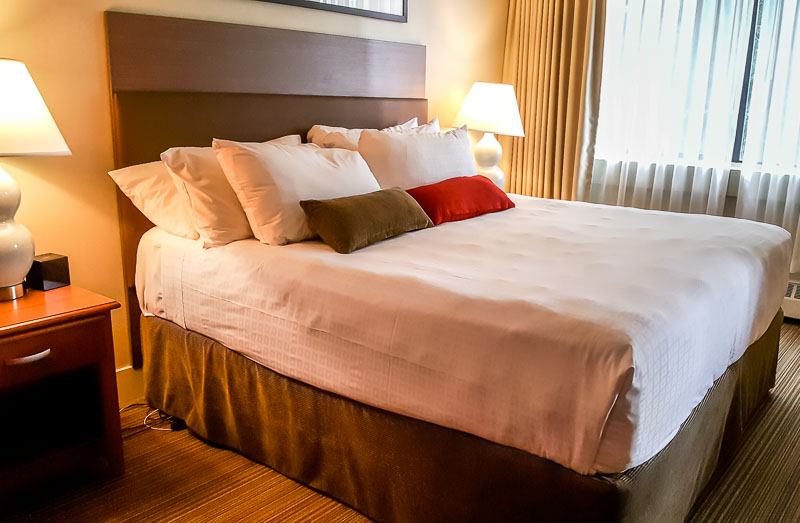
Hotels know people judge them heavily on sleep quality, so many put serious thought into their mattresses. A good hotel bed needs to work for thousands of different guests while holding up to constant use.
Meanwhile, mattresses at home have a sneaky habit of getting old gradually.
You don’t wake up one morning and suddenly discover your mattress has become uncomfortable. It happens slowly. A little sag here, a little less support there, until you spend a night somewhere else and suddenly realize how much better another bed feels.
If that keeps happening every time you travel, it may be worth looking at the bed you use the other 350-ish nights of the year.
You can even bring home a bed as comfortable as a good hotel’s rather than saving that level of comfort for the handful of nights a year you’re away.

Being Somewhere New Does Play a Part
Travel itself changes the rhythm of your day.
You may have walked for hours sightseeing, spent the afternoon swimming or simply been away from your normal routine. We’ve had plenty of travel days where we’ve walked 20,000 steps without even thinking about it. By bedtime, everyone is done.
There’s also something mentally different about climbing into a bed in a completely new place.
Sometimes that works against you. We’ve absolutely had nights where unfamiliar noises, strange pillows or a glowing hotel thermostat kept us awake.
Other times, though, being somewhere different seems to help break the usual bedtime patterns we fall into at home.
The easiest way to figure out what’s happening is to notice what you consistently love about your best hotel sleeps. Is the room colder? Darker? Is the mattress firmer? Are you spending less time staring at a screen before bed?
Those little clues are useful.

Give Your Bedroom One Main Job
This may be the hardest part of the hotel experience to recreate.
A hotel bedroom mostly exists for sleeping.
Your bedroom at home may also be your office, laundry sorting station, late-night TV room and temporary storage area for everything you haven’t figured out where to put yet.
We’ve definitely been guilty of this.
When your bedroom constantly reminds you of unfinished jobs, it’s much harder for the room itself to feel restful.
You don’t need to turn your bedroom into a minimalist showroom. Even moving work somewhere else, clearing a few cluttered surfaces and making the room feel calmer can change how it feels when you walk in at night.

Steal the Best Ideas From Hotels
One of the perks of staying in so many different places over the years is that you start noticing the little things that work.
If you sleep incredibly well somewhere, pay attention.
Maybe you love having two different pillow options. Maybe the room is darker than yours at home or the duvet is lighter. Maybe you like having almost nothing sitting on the bedside table.
Take the ideas home with you.
You can experiment without spending much at all, then put your money toward the changes that make the biggest difference for you.
Don’t Save Your Best Sleep for Vacation
Most of us spend far more nights sleeping at home than we ever will in hotels.
So if you keep coming home from trips talking about that amazing hotel bed, it’s probably worth figuring out exactly what made it so good.
Make your room darker. Try sleeping a little cooler. Replace the pillow that’s been flattened into a pancake. Put fresh sheets on the bed before you leave on a trip so you come home to something that feels almost as inviting as the hotel you just left.
And if your mattress has clearly reached the end of its useful life, maybe it’s finally time.
After 20-plus years of sleeping our way around the world, we’ve learned that there’s no single secret ingredient that makes hotel sleep better. Usually, it’s a bunch of small things working together, plus the underrated pleasure of knowing nobody expects you to take the garbage out in the morning.
You probably can’t arrange hotel housekeeping at home. The blackout curtains, however? That idea you can steal.
Some of our favorite hotel rooms;