Could You Live Here? Comparing Portugal, Spain, Costa Rica and Panama
After more than 20 years of traveling, there’s one question Charles and I seem to ask ourselves over and over again.
Could we actually live here?
It’s a surprisingly different question from whether we like visiting somewhere. We’ve loved countries that would probably drive us a little crazy if we tried to live there full time. Other places have grown on us once we stayed long enough to grocery shop, figure out the buses, work from the kitchen table and discover all those little details of everyday life.

Over the years, we’ve spent quite a bit of time in Spain, Portugal and Costa Rica. We’ve traveled through them as a couple and as a family, stayed for longer stretches, worked along the way and experienced at least a bit of what ordinary life feels like once the vacation glow wears off.
Panama is the odd one out here because we haven’t visited yet. It has, however, been on our radar for years. It comes up again and again when we hear people talking about retiring abroad, expat life and finding a practical home base somewhere warmer.
So, if you’re dreaming about moving abroad, how do Portugal, Spain, Costa Rica and Panama actually compare?
A quick note about this article: This post is sponsored by StartAbroad, a relocation service that helps people move to Portugal, Spain, Costa Rica and Panama.
They help with many of the parts of an international move that can get complicated fast, including visas, housing, banking, taxes, shipping, schools and pet relocation. They also offer a free planning tool called Navigator, which we’ll talk about a little later.
Ready to see what your move could look like? Start planning with StartAbroad and use code BAREFOOT to save 5%. We may earn a commission if you become a client, at no extra cost to you.
What Makes a Country a Good Place to Move To?
Choosing somewhere for a vacation is relatively easy. Find a cheap flight, book somewhere to sleep and go.
Moving to another country brings a much longer list of questions.
Can you legally live there long term? What will healthcare look like? Can you afford housing in the area you actually want to live? Will you need a car? If you’re bringing kids, what are the schools like? If your dog is coming too, what paperwork does that involve?
And then there are the smaller things that only become obvious once you’re living somewhere.
When we spent a few months traveling through Spain and Portugal years ago, I found myself fascinated by things like tiny fridges, people shopping at the small local market almost every day, late dinners and the fact that finding something as simple as contact lens solution could turn into an expedition. Those little details told us more about living in Spain as visiting another cathedral ever could.
For this comparison, we’re looking at the bigger practical questions alongside the kind of day-to-day life you might actually have once you get there.

Portugal: A Relaxed European Lifestyle With Plenty of Variety
Portugal is one of those countries we’ve returned to in our minds many times since visiting.
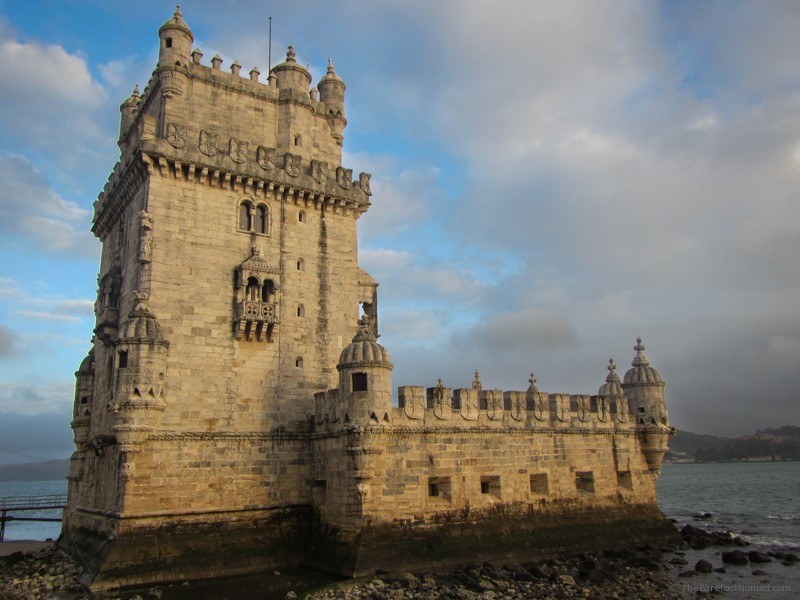
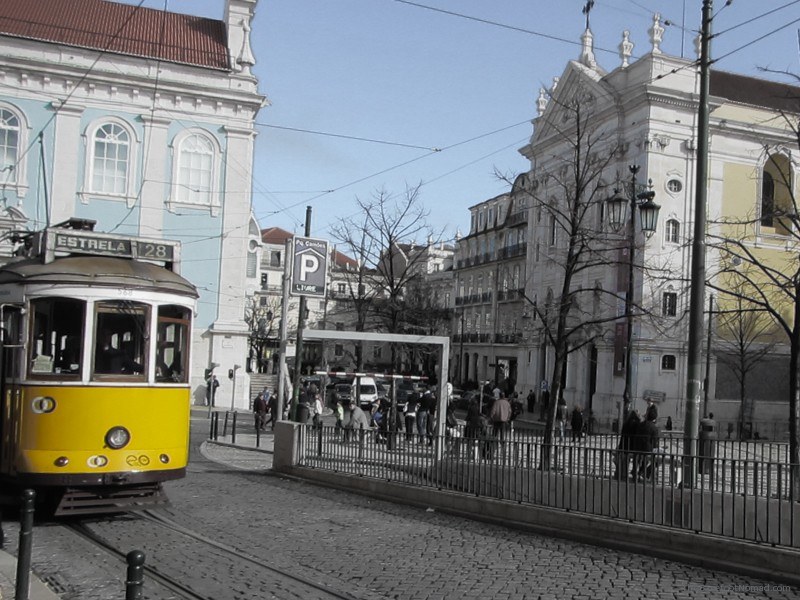
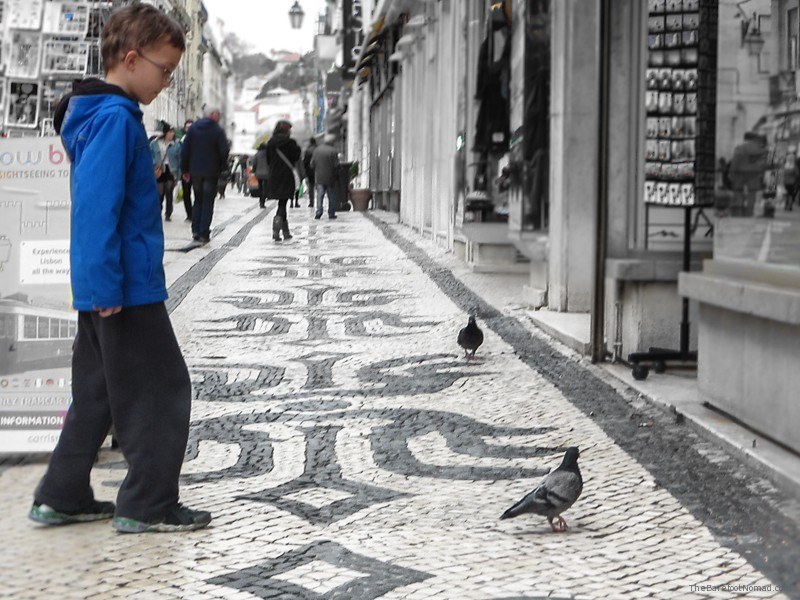
We’ve spent weeks driving around Portugal, exploring from the north right down through the Algarve. We’ve wandered Lisbon, cruised the Douro from Porto, explored the dramatic coastline around Sagres and eaten more than our fair share of pastéis de nata.
We’ve found people friendly almost everywhere we’ve gone, and Portugal packs an impressive amount of variety into a relatively small country.
Lisbon gives you big-city energy and international connections. Porto feels different again with old world charm and fantastic sites. Head south and the Algarve brings beaches, warmer weather and towns that can feel worlds away from northern Portugal.
That variety is just one reason Portugal makes sense on a relocation shortlist.

Who Might Like Living in Portugal?
Portugal may appeal if you want:
- A European home base
- Easy access to other parts of Europe
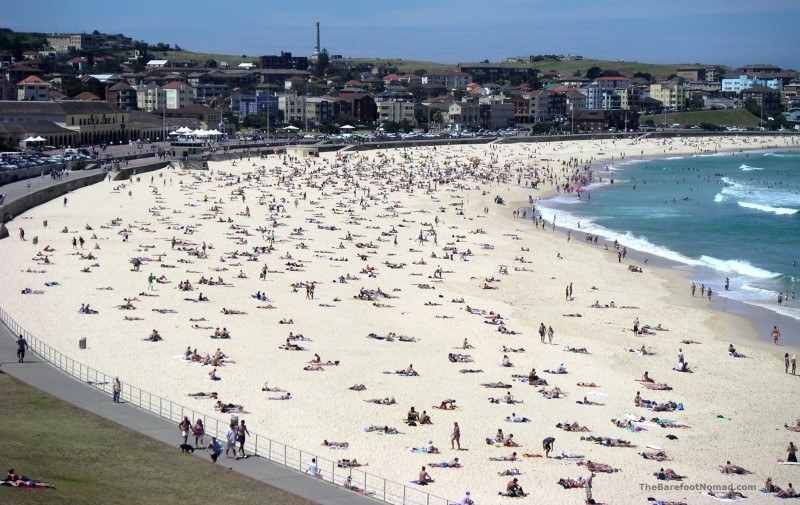
- Coastal living
- A slower everyday pace
- Cities, smaller towns and rural options within relatively short distances
- A country that can work for retirees as well as remote workers and families
For people considering a long-term move, Portugal currently has residence routes for retirees and people living on their own income, along with a residence pathway for people working remotely for employers or clients outside Portugal.
The exact route that makes sense depends on your citizenship, income source, work situation and family circumstances, which is where the paperwork starts getting considerably less fun.
One thing worth knowing if a European passport is part of your long-term plan: Portugal changed its nationality law in May 2026. The wait for citizenship through ordinary naturalization is now seven years for EU citizens and citizens of Portuguese-speaking countries, and ten years for most other nationalities. The previous rule that counted waiting time from the date you applied for temporary residence was removed, so the clock now starts from the point your residence is approved rather than the day you applied. Family reunification rules tightened in late 2025 too, so if you’re picturing moving first and bringing family over later, that’s worth researching before you apply instead of after.
StartAbroad currently helps with Portugal visas, rental searches, banking, Portuguese tax numbers (NIF), and broader relocation support. Their Concierge service also includes a dedicated relocation specialist, airport pickup, medical planning and help with things like schools and pet relocation.
Portugal may be a good fit for: retirees, remote workers, professionals and families who want a European base with plenty of different lifestyle options.
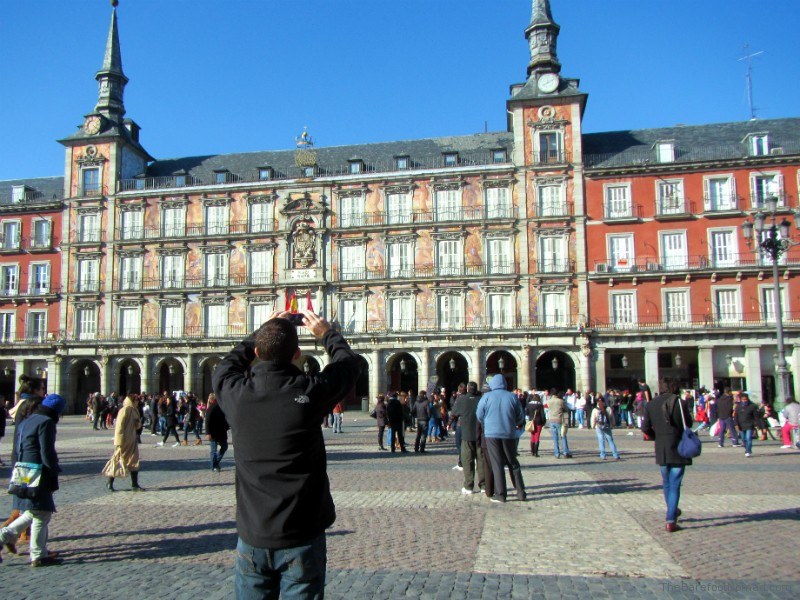
Spain: A Country We Could Actually Picture Living In
Spain gave us one of our better glimpses into the difference between visiting somewhere and actually living there.
We stayed long enough to settle into ordinary routines.
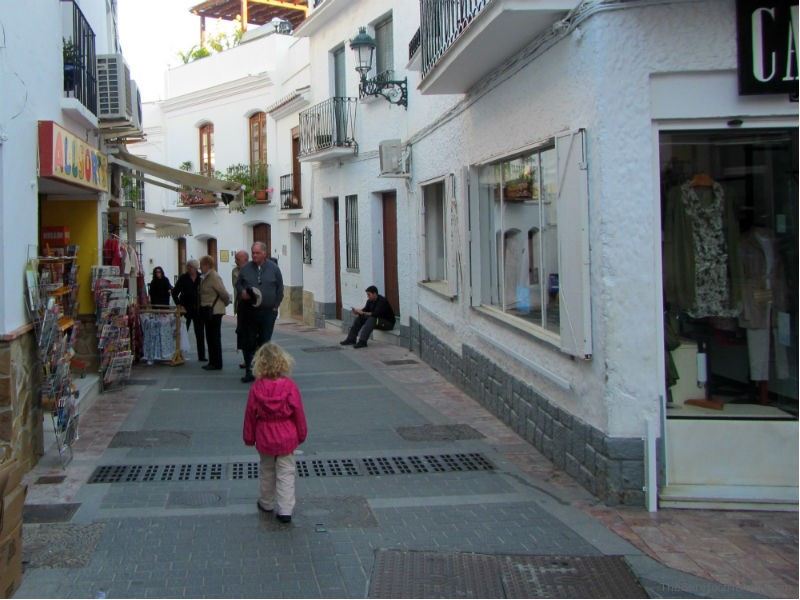
We walked, a lot. In Madrid we used the Metro, and even in smaller towns we often managed just fine without a car. We got used to shopping frequently because our rental fridges seemed ridiculously tiny compared with the giant fridge we’d had back in Canada.
We also learned that Spain operates on its own schedule.
Meals run late. People linger over coffee. Shops may close for several hours in the afternoon. Our own work and homeschool schedule meant that we were often ready to run errands at exactly the same time half the town seemed to be closing.
It was occasionally maddening.
And we loved a lot of it.
I’m also still quite fond of the fact that it took me almost a month and probably 20 cafés to finally find a bad cup of coffee. You can read more of our love and occasional frustration with Spain in The Little Things We Love About Spain.

Who Might Like Living in Spain?
Spain gives you an enormous amount of choice.
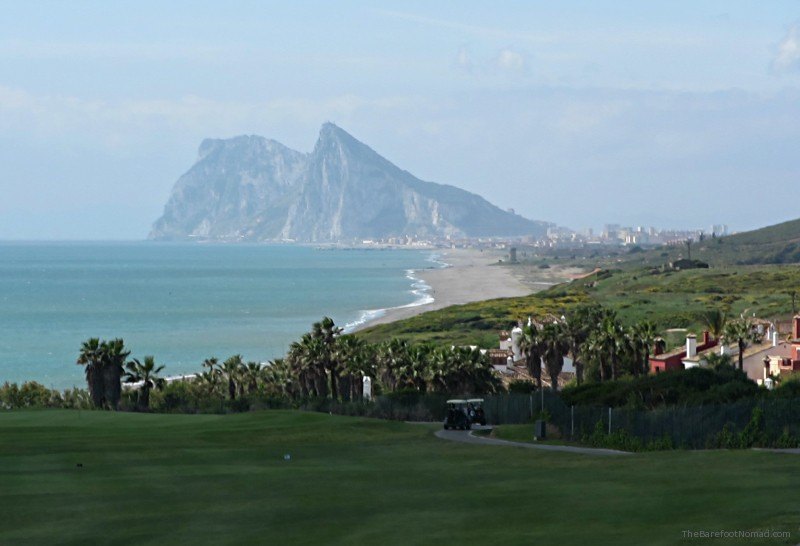
Living in Madrid is a completely different proposition from settling somewhere along the Mediterranean coast. Northern Spain feels different again.
Spain currently offers a non-lucrative residence visa for people who have sufficient financial means and don’t plan to work, plus a separate telework route for qualifying people who work remotely. The non-lucrative visa prohibits work, including remote work for a foreign employer, so if working online is part of your plan, make sure you’re looking at the right route from the beginning. Under Spain’s current rules, foreigners who are legally in Spain can apply from within the country for an international telework residence authorization if they qualify.
For families, there’s also the question of schools and where you want your kids to fit into local life. For retirees, healthcare and proximity to services may matter more. And if you’re planning to work online, reliable internet and your time zone relative to clients or coworkers can suddenly matter just as much as sunshine.
Spain may be a good fit for: people who want culture, good transportation options, plenty of regional variety and a lifestyle where daily life happens a little later than many North Americans are used to.

Costa Rica: Nature, Warm Weather and Pura Vida
Costa Rica will probably always have a special place in our hearts.
Some of our memories there are huge, like watching a giant leatherback turtle lay eggs on a moonlit beach at Playa Grande.
Others are considerably less profound. From howler monkeys screaming off our balcony to iguanas the size of small dogs, the wildlife in Costa Rica is amazing.
We developed a slightly ridiculous affection for Trits ice cream sandwiches and bought them often enough that they became part of our Costa Rica routine.
We also spent a lot of time around Tamarindo and Guanacaste with the kids. Tamarindo was one of those places we loved and found frustrating at the same time. The beach was fantastic, the atmosphere laid back and there was always something to do.
It was also unbelievably hot during our stay, touristy in places and, at least when we were there, some of the local infrastructure was rough around the edges.
That mixed experience is exactly why we’d never tell someone to move to Costa Rica simply because they had a fantastic vacation there.
Living somewhere means seeing the whole package.
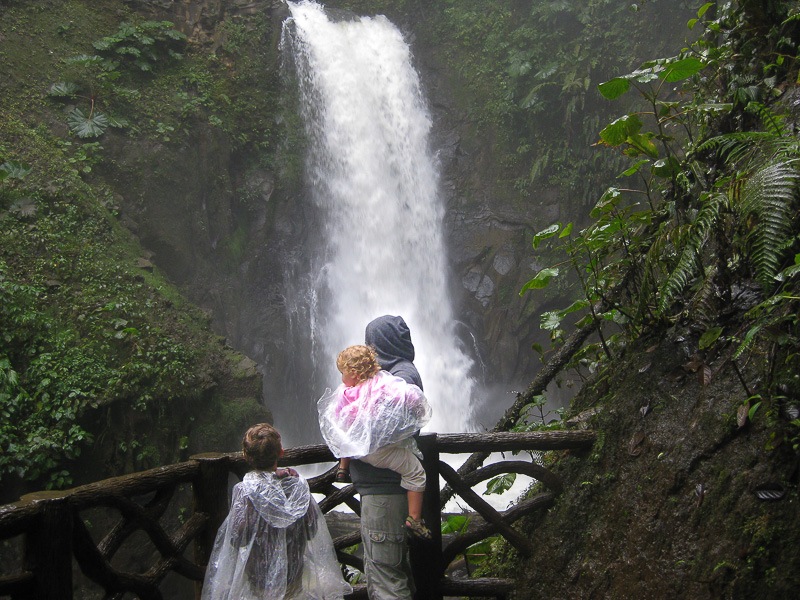
Who Might Like Living in Costa Rica?
Costa Rica has long attracted retirees and international residents, and it also has a formal digital nomad program for qualifying remote workers.
The current program allows eligible remote workers to stay for one year with the possibility of renewing for another year, subject to the program requirements. Costa Rica also has longer-term residency categories, including pensioner and temporary resident options.
Where you choose to live matters enormously.
Life in the Central Valley around San José is quite different from living near the Pacific beaches of Guanacaste. Climate, healthcare access, transportation and even how much English you hear every day can change substantially depending on where you settle.
StartAbroad currently supports Costa Rica moves involving Pensionado, Rentista and Inversionista residency as well as digital nomad stays, plus services including housing and relocation support.
Costa Rica may be a good fit for: retirees, remote workers and families who put warm weather, nature and outdoor living high on their wish list.

Panama: An Interesting Option for Retirees and Expats
Panama is the only country on this list we haven’t personally visited, so we can’t tell you which café has the best coffee or what little daily habit would eventually drive us crazy.
Yet.
What we can say is that Panama has been popping up in our orbit for years whenever the conversation turns to retiring or moving abroad.
And there are practical reasons for that.
Panama’s immigration system includes several permanent and temporary residence categories. The main routes people tend to look at are the Pensionado for retirees, the Friendly Nations Visa for working-age people who can show economic ties, and the Qualified Investor Visa for those putting money into property or other qualifying assets
That makes it particularly interesting for retirees who are comparing international options.
One practical wrinkle to know about before you start: Panama legally requires applications for temporary and permanent residency permits to be filed through a legal representative. In other words, this is a country where hiring a Panamanian immigration lawyer is part of the process rather than an optional extra.
There’s also a huge difference between considering Panama City and looking at smaller communities elsewhere in the country. The city and the lowlands are hot and humid, while highland towns like Boquete, in the cooler Chiriquí region, have long drawn retirees for the spring-like climate. This is another destination where I’d spend time exploring before deciding where to settle.
StartAbroad offers relocation services in Panama that can include immigration connections, airport pickup, medical planning, pet relocation and housing support.
Panama may be a good fit for: retirees and other long-term expats who want to explore an established international relocation destination in Central America.

Portugal vs Spain vs Costa Rica vs Panama at a Glance
| Country | May Be Best For | Lifestyle | One Big Appeal | Something to Think About |
|---|---|---|---|---|
| Portugal | Retirees, families, remote workers | Relaxed European | European access and regional variety | Choosing the right residency route |
| Spain | Families, retirees, remote professionals | Social, walkable in many areas, later daily rhythm | Huge variety of cities and regions | Bureaucracy and matching your visa to whether you’ll work |
| Costa Rica | Nature lovers, retirees, remote workers | Tropical and outdoor-focused | Beaches, wildlife and outdoor living | Infrastructure and climate vary considerably by location |
| Panama | Retirees and long-term expats | Varies from big-city to relaxed smaller communities | Established residency options, including a pensioner category | Residency applications require legal representation |
So Which Country Is Best for You?
If we had to narrow it down by lifestyle rather than trying to crown one country the winner, this is how we’d start thinking about it.
Consider Portugal If…
You like the idea of living in Europe and want plenty of choices between cities, smaller towns and coastal areas.
Portugal is particularly interesting if you’re retiring, working remotely or looking for a European base that feels manageable in size.
Consider Spain If…
You want regional variety and enjoy a social culture where eating, walking, coffee and time spent outside are woven into everyday life.
Of the four, Spain is probably the country where we’ve had the strongest taste of ordinary day-to-day living, and we could certainly picture ourselves spending much longer there.
Consider Costa Rica If…
Your dream life involves warm weather, beaches, wildlife and spending a lot of time outdoors.
Spend some time in the specific region you’re considering first. Costa Rica can feel remarkably different from one part of the country to another.
Consider Panama If…
Retirement is a major part of your plan and you’re interested in a country with established residence categories for pensioners and other long-term residents.
We’d put Panama firmly in the research-and-go-visit category for ourselves because we haven’t experienced it firsthand yet.
Picking a Country Is Only the Beginning
This is the part that can sneak up on you.
You spend months dreaming about a tiled apartment in Portugal or a house near the beach in Costa Rica, finally decide where you want to go and then realize there are approximately nine thousand practical things between you and actually living there.
Okay, nine thousand might be a slight exaggeration.
But international moves come with paperwork.
Depending on your situation, you may need to deal with:
- Visas and residency
- Taxes
- Local banking
- Healthcare and insurance
- Finding a long-term home
- Moving your belongings
- Bringing pets
- Schools
- Utilities and phones
- Transportation
- The logistics of actually arriving and getting settled
We’ve been traveling internationally since 2003, and even after all these years, new countries still regularly find ways to surprise us with a process or piece of paperwork we didn’t know existed.
That’s the side of moving abroad that StartAbroad is designed to help with.
How StartAbroad Helps With an International Move
StartAbroad is a done-for-you relocation company focused on moves to Portugal, Spain, Costa Rica and Panama.
Their services vary somewhat by destination and the kind of support you choose, but can include help with visas, banking, housing, shipping, schools, pet relocation and arrival logistics.
One part of their approach that caught our attention is that clients work with one dedicated relocation specialist from start to finish. StartAbroad describes this as a single person who knows your situation and stays with you throughout the move rather than repeatedly handing you off to someone new.
They work with:
- Retirees planning an international move
- Families moving with kids or pets
- Digital nomads
- Professionals moving abroad long term
StartAbroad says it has now helped relocate more than 1,000 clients and reports a 100% success rate for qualifying clients. Clients also get access to a portal showing what has been completed, what comes next and what StartAbroad needs from them.
That last part appeals to me because international paperwork has a remarkable ability to turn into a pile of emails, documents and sticky notes surprisingly fast.

Start Planning for Free With StartAbroad Navigator
If you’re still in the someday-I-might-do-this stage, you don’t necessarily need to jump straight into a full relocation service.
StartAbroad has also launched Navigator, a free tool designed to help you organize your move step by step.
The current Navigator includes planning tools such as visa checklists, pre-arrival checklists and relocation resources, with individual services available if you need more help later.
You can check out StartAbroad Navigator here.
It’s a useful starting point if you’re trying to turn a vague idea of moving abroad into an actual list of things you need to figure out.
Talk to a Relocation Specialist for Free
If you’re further along and already have questions about your move, StartAbroad also offers a free 15-minute consultation with an international relocation specialist.
Start planning your move with StartAbroad
Use coupon code BAREFOOT to save 5%.
Where Could You See Yourself Living?
After more than two decades of travel, we’ve learned that visiting somewhere and picturing an actual Tuesday afternoon there are two completely different things.
Could you grocery shop there? Get around comfortably? Find healthcare when you need it? Make friends? Deal with the weather for months instead of a week?
And, just as important, does the rhythm of the place feel right?
Portugal, Spain and Costa Rica have all given us moments where we could picture what life there might look like and we’ve seriously looked into moving to two of them. Panama is still waiting for us to come investigate it properly.
If you’re considering a move yourself, spend some time thinking beyond the postcard version of the country. Research the practical pieces, visit the area you’re thinking about beforehand and try to stay someplace more local than a resort or even a hotel.
Pay attention to the little things once you’re there. Go to the local grocery store, check out a houseware section and imagine what kinds of things you would need to do on a regular visit. If you have kids, check out where they would go to school and find out what options they have for activities.
If you’re a retiree, look into what services are available and what activities you could become a part of. If planning to work remotely, find out what internet is like and whether there’s any local places to meet up with other remote working expats as they’ll have a better idea of the realities of living there every day.
And when someday starts turning into an actual plan, take a look at StartAbroad, they can help you work through the practical side of moving abroad, from visas and housing to banking, shipping and getting settled.
Use coupon code BAREFOOT to save 5%.