What Can the BLUETTI Elite 300 Actually Run? Our Real-World Home, Outdoor, and Solar Charging Test
This post is sponsored by BLUETTI. All testing, opinions, and real-world notes are our own.
Portable power stations are becoming as ubiquitous to camping and rv/van life as they are to emergency home backup power users and off gridders.
The power options they provide is easy to understand when we’re talking about phones, tablets, laptops, drone and camera batteries. Those are useful, of course however they’re also the easy stuff.
You can check out the BLUETTI Elite 300 here. Use code BFNElite300 for an extra 6% off the Elite series until June 8. After that, the code changes to 5% off.
What I really wanted to know with the BLUETTI Elite 300 was this, could it handle the bigger things we’d actually care about during a power outage, an outdoor work day, a road trip, or a car-camping-style setup?
Could it run a full-size fridge? What about an espresso machine? An air fryer? A small heater? Work tools? And once we took it outside, how useful would it feel paired with two of Bluetti’s Sora 220W folding solar panels? Can they recharge this unit fast enough to make them worthwhile?
That’s the test we set up for this review.
Instead of only looking at specs, we used the BLUETTI Elite 300 in a few realistic ways: at home with bigger appliances, outside with the kind of gear we’d actually bring along on a typical camping trip, and with solar charging through the BLUETTI app so we could see what was coming in and going out in real time.
Why We Wanted to Test the Bigger Stuff
We’ve used smaller power stations before, and they can be great for the right situation. If all you need is a way to charge a phone, power a laptop, or keep a camera or micro drone battery topped up, a small unit can do the job nicely.
But the BLUETTI Elite 300 is in a different category.
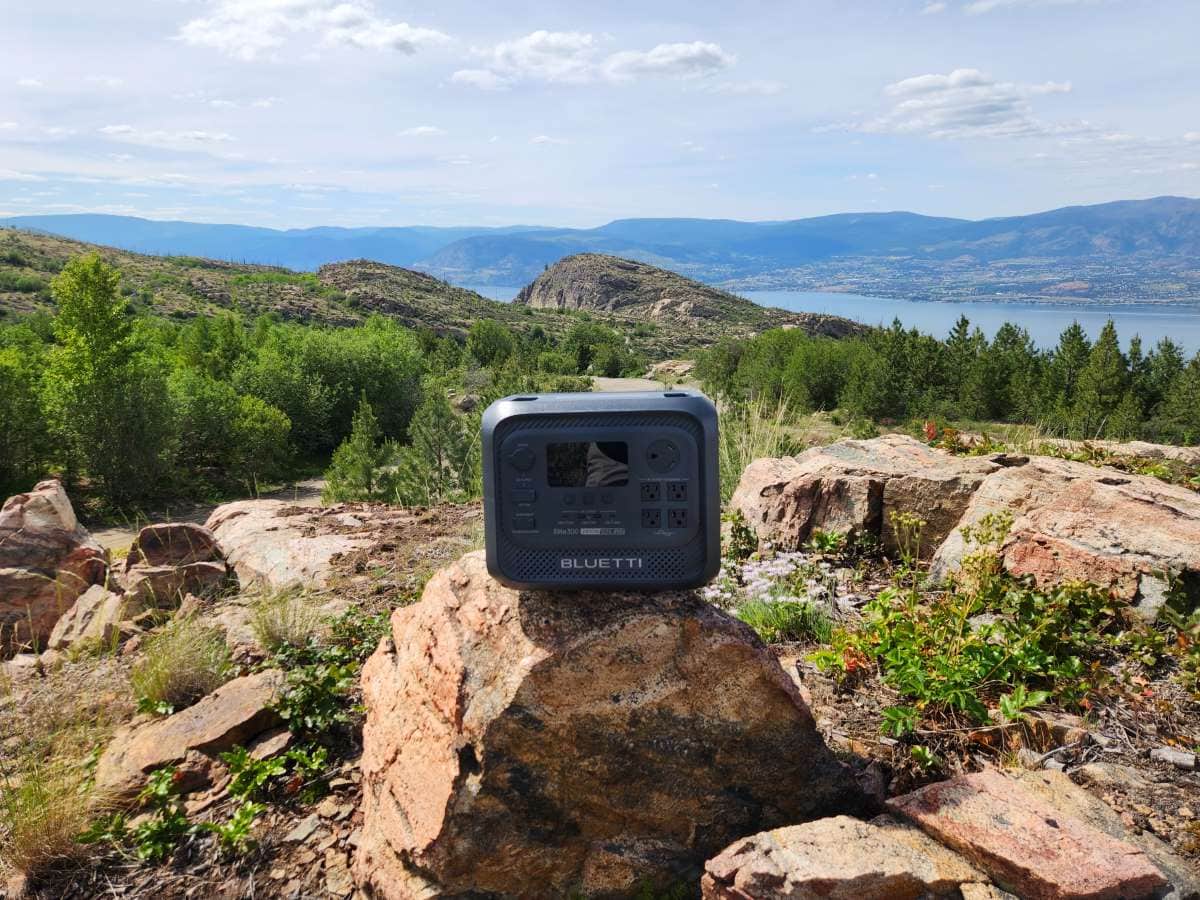
It has a hefty 3014Wh capacity and a 2400W AC output, which means it’s designed for more than just topping up small devices. BLUETTI positions it as a portable power station for home backup, RVs, outdoor power, and off-grid use, and that’s exactly where the bigger-load testing starts to matter.
For our family, the most useful question wasn’t “Can it charge a phone?”.
It was “Can it help keep normal life going when the power is out, or when we’re away from a wall outlet and still want to run real things?”
What We Tested With the BLUETTI Elite 300
For this review, we focused on the kinds of devices and appliances that would actually matter to us.
Our test list included:
- A full-size fridge
- An espresso machine
- An air fryer
- Camera gear and batteries
- Phones and everyday electronics
- Two Sora 220W solar panels
- The BLUETTI app for checking input, output, battery level, and solar charging
We used the home tests to see how the Elite 300 handled larger household loads. Then we took it outside to see how it felt in a more practical outdoor setup with the solar panels connected to see how well it charged and whether passthrough mode worked as they claim.
Home Test: Can the BLUETTI Elite 300 Run a Full-Size Fridge?
The fridge test was the one I cared about most.
During a power outage, keeping food cold is usually one of the first things people think about as spoiled food can easily run you into the hundreds of dollars for replacement and health dangers from lack of sufficient refrigeration go up quickly within the first 24 hours.
Phones are nice. Laptops are useful. But if the power goes out for hours or days, the fridge (or a deep freezer) suddenly becomes a much bigger deal.
BLUETTI’s product materials mention a refrigerator using around 1kWh per day, with an estimated runtime of about 59.9 hours. Of course, every fridge is different. A full-size household fridge can have a higher startup surge when the compressor turns on, and actual runtime depends on the model, temperature, how often the door is opened, and how hard the fridge is working.
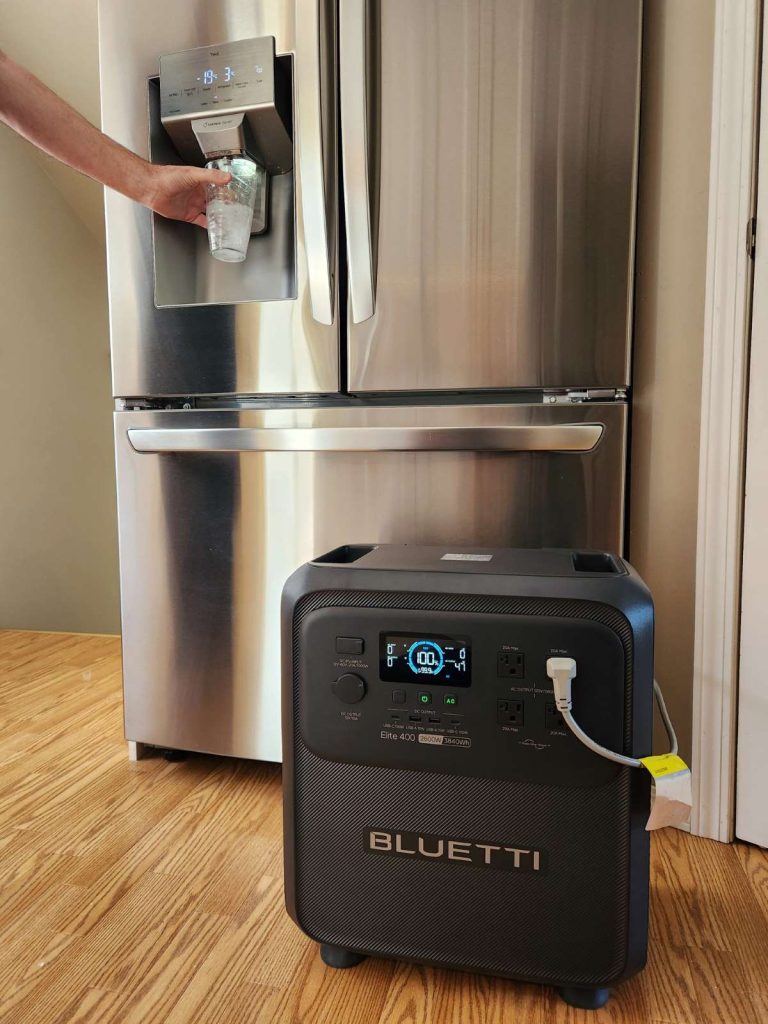
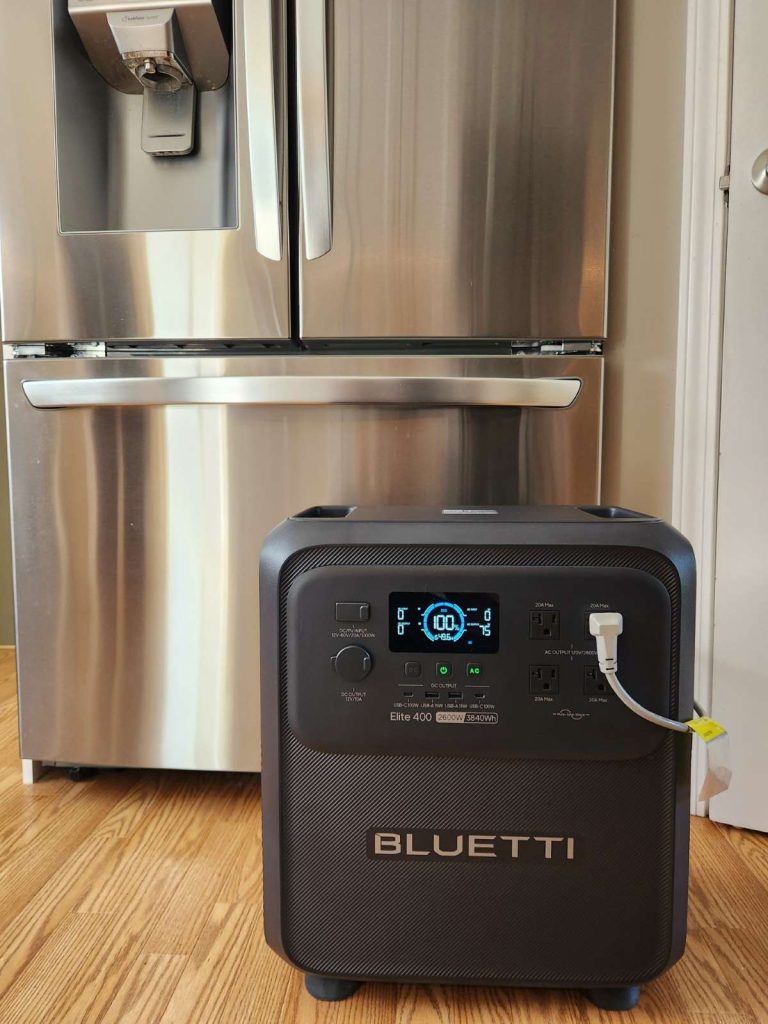
So we wanted to test our own fridge instead of guessing. We tested the Elite 300 running our fridge, ice maker and water dispenser. To sum it up, it worked like a champ!
After testing it with real household and outdoor loads, the Elite 300 feels like a solid option if you want something bigger than a small device charger. You can take a look at the BLUETTI Elite 300 here, and use code BFNElite300 for an extra 6% off the Elite series until June 8. After June 8, the code changes to 5% off.
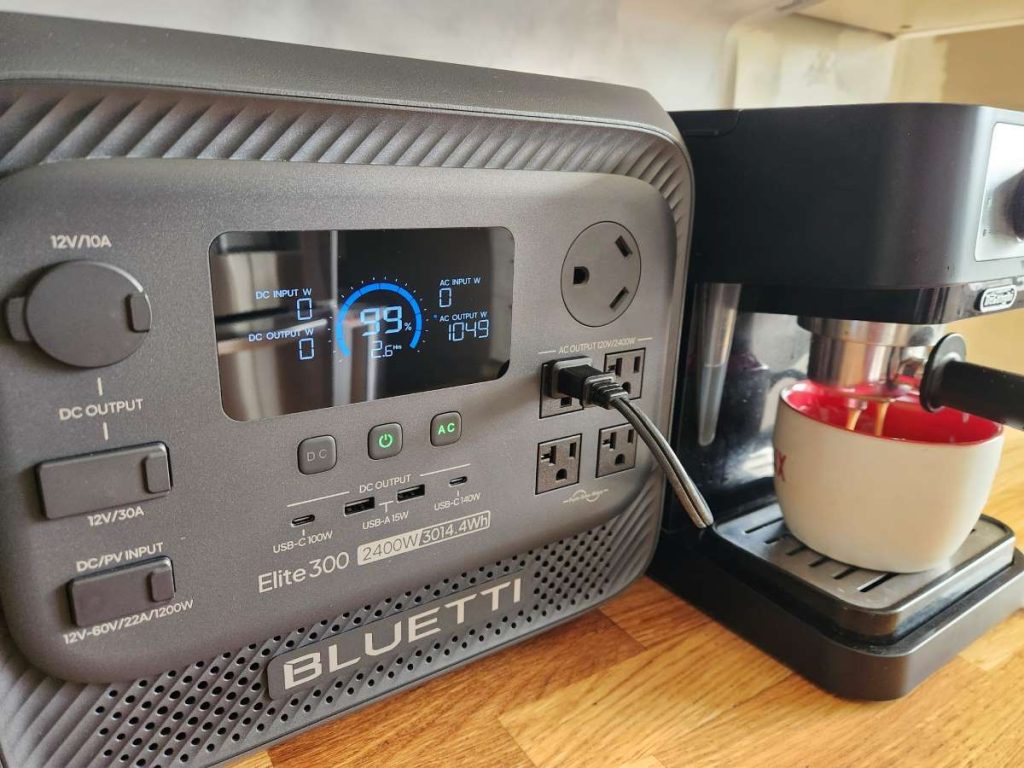
In our test, the Elite 300 ran our full-size fridge without issues. The wattage moved around as the fridge cycled on and off and varied from a not much happening 41w up to 210w when we left the door open for 3 minutes to force it into a power cooldown cycle. The unit handled the load and the app made it easy to see exactly what was happening every step of the way.
In fact, the display said we could power our fridge for over 40 hours with the Elite 300! This is one of the places where the app is especially helpful. Instead of guessing how much power everything is using, you can see the output in real time.
Testing Higher-Load Appliances: Espresso Machine and a Full Size Air Fryer
After the fridge, we moved on to the more everyday comfort tests.
Because yes, keeping food cold matters. But coffee also matters. I’m not saying I’d become dramatic during a power outage with no coffee, but I’m also not saying the opposite.
We tested the Elite 300 with our espresso machine and an air fryer to see how it handled higher-load kitchen appliances.
It easily managed a load of over 2,500 watts running both appliances at the same time.
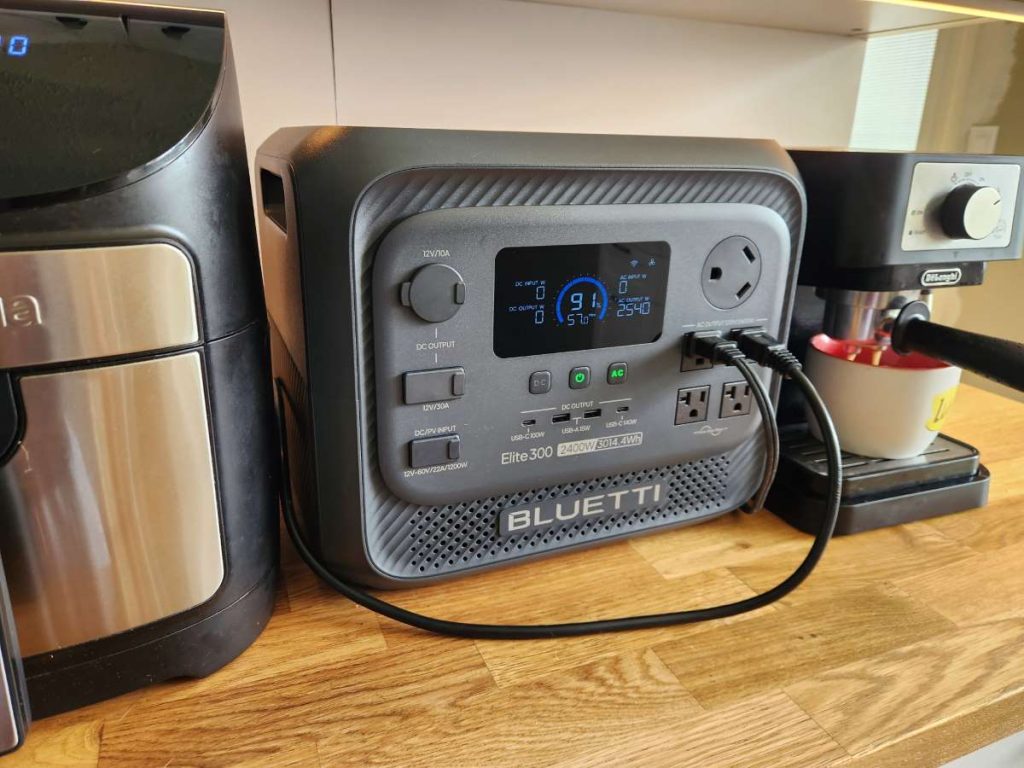
This is where the Elite 300 starts to feel different from a smaller power station. It’s not just for small electronics. It’s built for the kinds of appliances that make power backup and outdoor power more practical.
BLUETTI lists the Elite 300 with 2,400W AC output and a Power Lifting Mode up to 4,800W for pure resistive loads. That doesn’t mean every appliance in the house is automatically a perfect match, but it does mean the Elite 300 is made for bigger jobs than phone charging.
Using the BLUETTI App During Testing
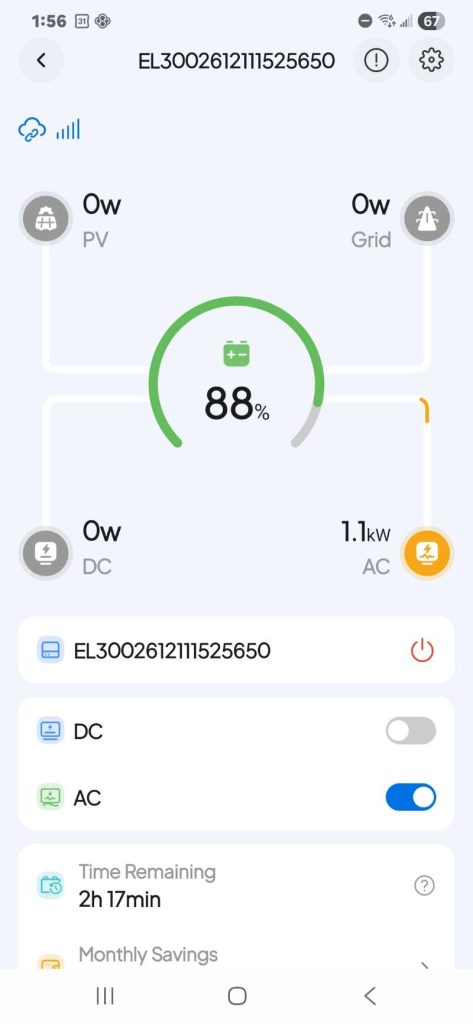
The BLUETTI app (available for both Apple and Android), ended up being one of the more useful parts of the test because it gave us a clear look at what was happening.
When we plugged in different appliances, we could see the output change. When we connected the Sora 220W solar panels, we could see solar input. Whether the Elite 300 was charging or discharging, we weren’t just relying on the battery percentage on the unit itself.
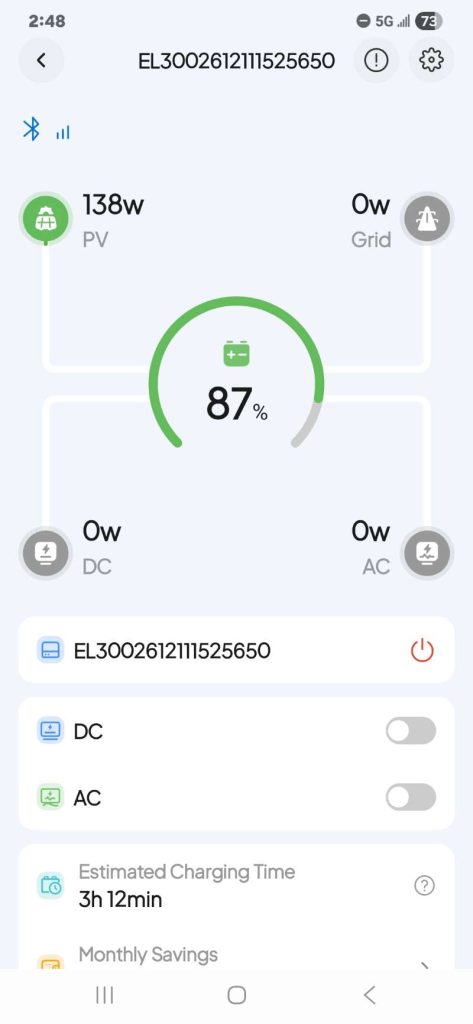
For the kind of testing we did, the app was helpful for checking:
- Battery percentage
- Current power output
- Current input while charging at home
- Solar charging input when hooked to a solar panel
- Charging and discharging status
- Settings and operating modes
If you’re the kind of person who likes to know what’s actually happening when devices are plugged in, the app makes the Elite 300 feel more transparent and easier to understand.
Outdoor Test: Taking the Elite 300 Away From the Wall Outlet
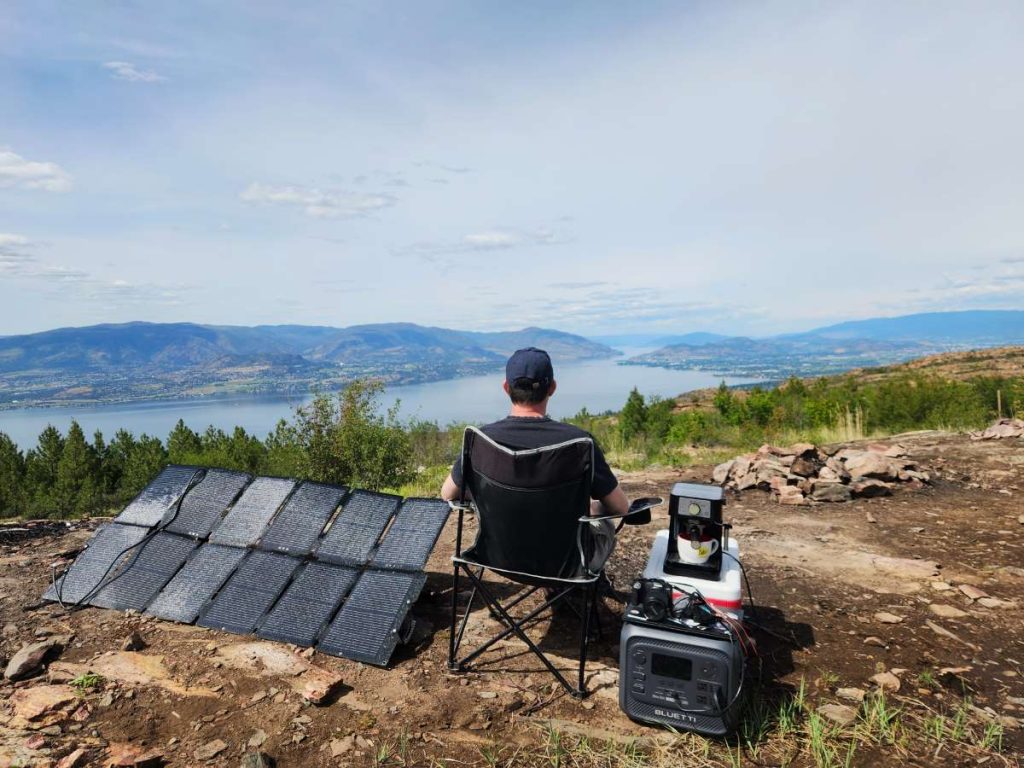
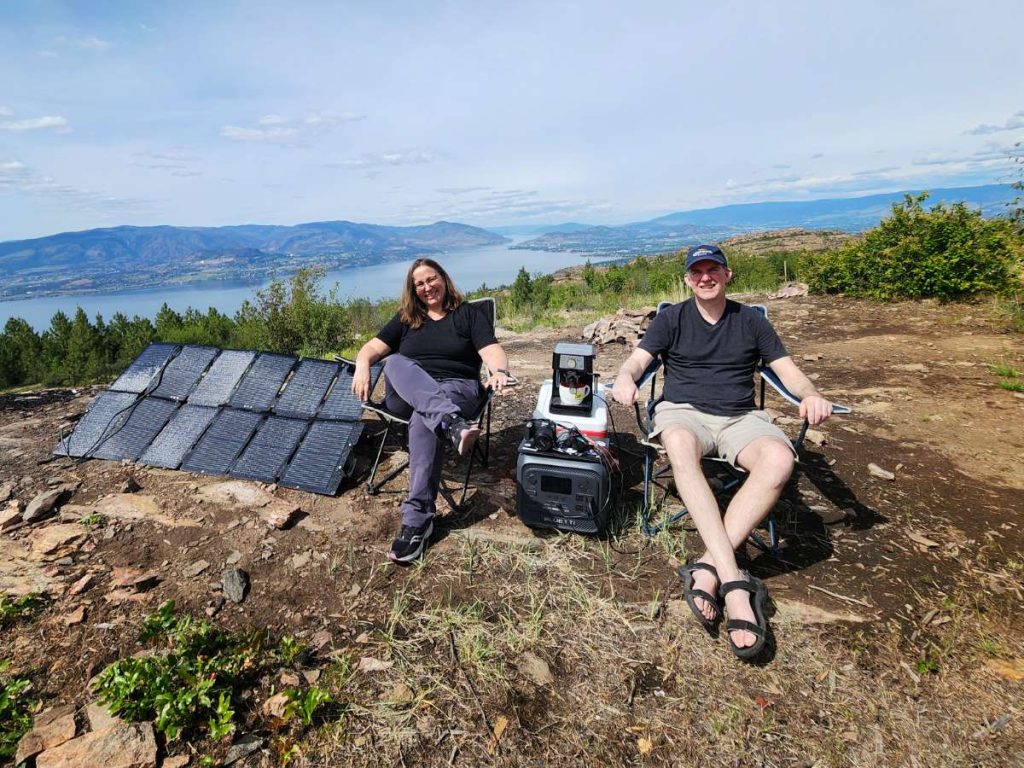
We set up the kind of outdoor situation we’d actually use: trees in the background, a few devices, something fun to make, camera gear, and the Elite 300 nearby.
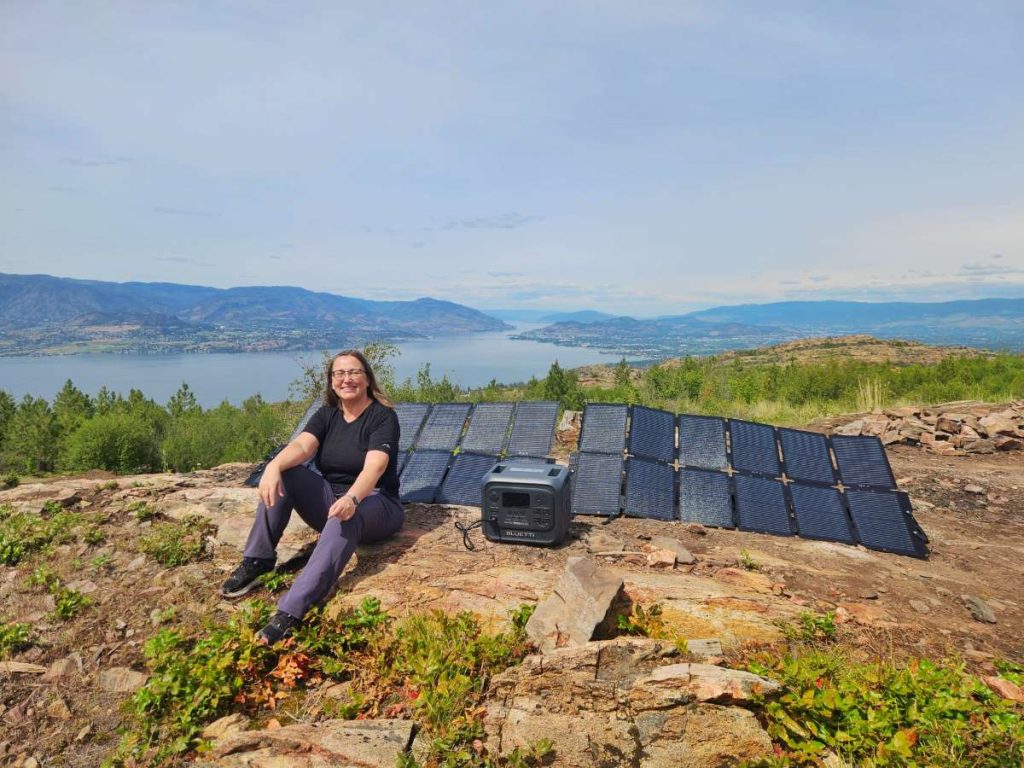
This is probably how a lot of people would use a setup like this in real life. Maybe it’s a car-camping weekend. Maybe it’s an extended day trip. Maybe it’s a backyard party, an outdoor work day, a picnic, or a road trip stop where you want power without hunting for an outlet.
For our outdoor test, we used:
- The BLUETTI Elite 300
- Two Bluetti Sora 220W folding solar panels
- An espresso machine
- A kettle
- Phones
- Camera gear
- A laptop
- A Kindle
The fun part of the outdoor test was that it made the Elite 300 feel less like emergency gear and more like something you could use for normal life outside.
Making coffees in the outdoors is definitely not an essential survival test. But it is a very clear way to see whether the unit can handle the kinds of things that make outdoor days easier, more comfortable, or just more fun.
Solar Charging With Two Sora 220W Solar Panels
The Sora 220W solar panels are an important part of this setup, but I think the clearest way to understand them is this:
The solar panels don’t change what the Elite 300 can run. They change how practical it feels to use the Elite 300 away from a wall outlet.
That distinction matters.
When we took the Elite 300 outside, we weren’t trying to run a espresso maker directly from the panels. We were using the Elite 300 as the power source, while the two Sora 220W panels helped recharge the unit while we were outside.
That’s the piece that makes the setup more useful for outdoor days, road trips, car camping, and backup power. Instead of treating the power station like a battery that only drains down, solar gives you a way to put some energy back in while you’re using it, for free.
Solar charging can vary a lot depending on sun angle, clouds, shade, time of day, and how the panels are positioned. That’s why I like showing the app during the test. It makes the solar input visible instead of vague.
How Fast Can the BLUETTI Elite 300 Recharge?
According to BLUETTI’s product deck, the Elite 300 supports AC, solar, car, generator, and AC plus solar charging. The deck lists solar charging at up to 1,200W max, with a full solar charge estimate of around 4.1 hours under ideal conditions.
At home, you can recharge it via the plug in an hour and change and it includes passthrough mode so it can continue powering devices while it charges in any mode. It can also be used as a UPS with only a 10ms transfer time.
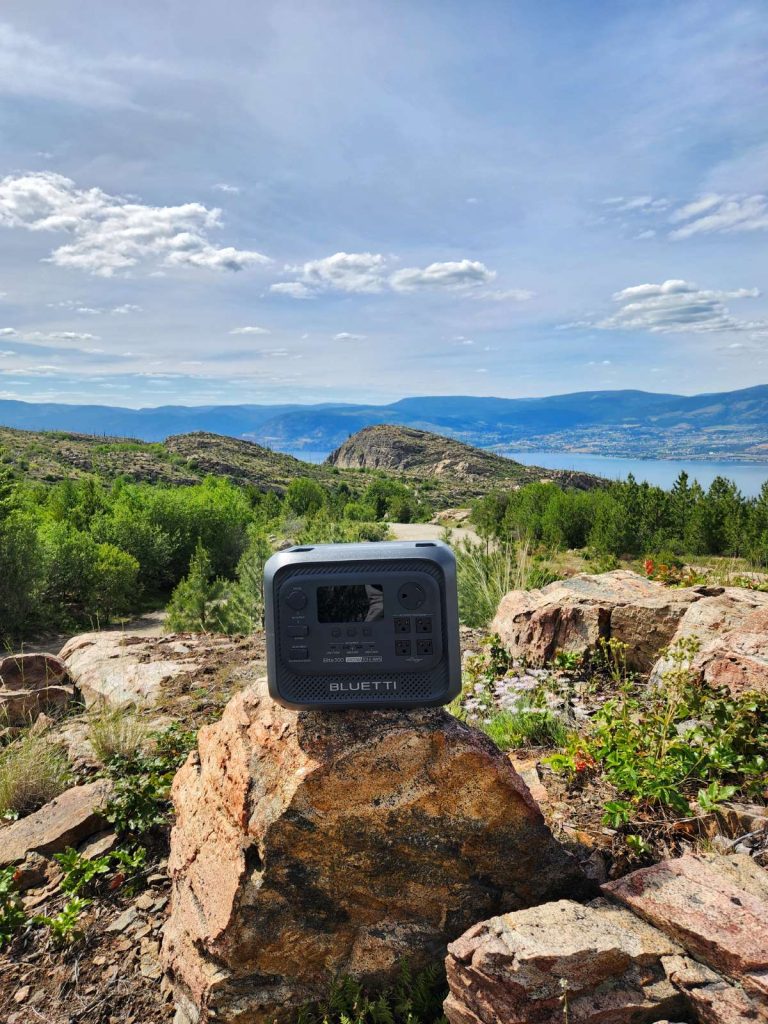
In normal outdoor use, your solar charging speed will depend heavily on the conditions. A perfect sunny day with well-angled panels is very different from a cloudy afternoon with trees nearby.
That’s why our solar test was less about chasing a perfect lab number and more about seeing what happened in a real outdoor setup.
We wanted to know:
- Was the setup easy to connect?
- Could we see useful input from the panels?
- Was the app helpful for adjusting panel placement?
- Did solar charging make the outdoor setup feel more practical?
Our solar charging takeaway
While setting up the folding Bluetti Sora 220W solar panels for the first time required us to check the documentation when figuring out their correct positioning, plugging in a single panel was as simple as connecting the positive and negative universal MC4 prongs to the panel and then plugging the other end into the DC input panel on the Bluetti Elite 300. It was that easy and it started working immediately.
When connecting both solar panels, we had to run a couple cable extenders however they were the same style connectors so it was plug and play easy.
Even not optimizing the angle and with sky hazy with clouds, with one solar panel plugged in we instantly hit 160W and then doubled that the moment we extended it to both of them. We were down past 70% after a battery of tests at home but before we knew it we were back above 90% just with free solar!
What the BLUETTI Elite 300 Can Run
Based on BLUETTI’s specs and our testing, the Elite 300 is designed for a wide range of devices, from small electronics to larger appliances.
In our real-world setup, we looked at:
- Full-size fridge (from 40 to 240W)
- Deep freezer (from 20 to 300W)
- Espresso machine (1200W)
- Air fryer (1500W)
- Phones
- Laptops
- Camera batteries
- Tool battery charger
- Outdoor devices and small appliances
The biggest thing to remember is that runtime depends on the device. A phone uses very little power and the Bluetti Elite 300 could recharge a typical one 90+ times on a single charge.
While a fridge cycles on and off and on average consumes less that you’d expect in 24 hours, an espresso machine may draw a lot of power but is only used for a short time. A laptop falls somewhere in the middle depending on the model and specs.
That’s why capacity and output both matter.
The Elite 300’s 3,014Wh capacity gives you a lot more room to work with than a small power station, and the 2,400W AC output means it can handle higher-load devices that smaller units may not be built for.
Who the BLUETTI Elite 300 Makes Sense For
After using it at home and outside, I think the Elite 300 makes the most sense for people who want more than a small emergency battery.
It’s a good fit for:
- Families who want backup power for outages
- People worried about keeping a fridge or freezer running during blackouts
- Road trip and RV users
- Car campers
- Outdoor content creators
- People who work outside or away from outlets
- Anyone who wants to run more than phones and laptops
- People who want the option to recharge with a variety of solar panels
It may be more than you need if you only want to charge a phone a few times over a weekend however it’s also not the tiny power station you toss into a backpack. While it’s one of the smallest 3000Wh power stations you’ll find, the reality is that it’s not backpack light.
However, if your goal is practical power for real appliances, home backup, outdoor setups, and solar charging, the Elite 300 feels much more useful than a smaller unit.
Bluetti Elite 300 vs. a Smaller Power Station
This is where the difference became clearest for me.
A smaller power station is great when the job is small. Phone, laptop, camera battery, tablet, maybe a small fan. Those uses are all helpful, and there are plenty of times when smaller is better.
The Elite 300 starts to make sense when your list gets bigger.
If you’re thinking about a fridge, deep freezer, an espresso machine, an air fryer, a tv, camera gear, or several devices at the same time, you’re in a different kind of power category.
That’s the point of this unit. It’s still portable, but it’s built for bigger asks.
Final Thoughts: What Can the BLUETTI Elite 300 Actually Run?
After testing the BLUETTI Elite 300 at home, outside, and with solar charging, the biggest takeaway is that this feels less like a simple device charger and more like a practical portable power setup.
It’s made for the moment when charging phones isn’t enough anymore.
At home, that might mean keeping a fridge running during an outage, making coffee, charging tool batteries, or keeping essential devices powered. Outside, it might mean using an espresso machine, charging camera gear, powering a picnic table setup, or working away from an outlet. With the two Sora 220W solar panels, it also gives you a way to recharge the Elite 300 when you’re outdoors instead of only watching the battery drain.
That combination is what makes the setup useful.
The Elite 300 is the main power source. The Sora solar panels make it more practical when you take that power outside.
For us, that’s the real story: bigger portable power, tested with the things we’d actually use, in the places we’d actually use them.
You can learn more about the BLUETTI Elite 300 and check the latest price here. Use code BFNElite300 for an extra 6% off the Elite series until June 8. After that, the discount code will continue at 5% off.